How to Invest in Gold and Silver ETFs: A Simple Guide
Investing in precious metals like gold and silver has evolved significantly. While gold may be recognized as a global hedge against inflation, silver often sees price movements influenced heavily by industrial demand, such as in green technologies. Today, you do not need to buy physical bars or coins to own these metals. Exchange Traded Funds (ETFs) offer a modern, efficient way to gain exposure to these assets.
Why Choose ETFs for Gold and Silver?
Gold and Silver ETFs are passive investment instruments that are based on gold and silver prices and invest in gold and silver. They track the price of the respective metals and are backed by its physical holdings.
- Ease of Access: These ETFs trade on major stock exchanges, allowing easy entry and exit for investors.
- No Storage Hassles: Unlike physical bullion, where storage costs and theft risks may be a concern for investors , ETFs are held electronically in your Demat account.
- Liquidity: You can buy and sell ETF units during market hours just like equity shares.
What are the risks associated with investing in Gold and Silver?
- No Passive Income: Neither metal pays interest or dividends.
- High Volatility: Silver price swings can be severe (2-3x that of gold).
- Storage Costs: Physical assets require safes or bank vaults and insurance.
- Currency Risk: A strengthening dollar often suppresses metal prices.
How to Invest in Gold and Silver ETFs?
Investing in these ETFs is a straightforward process, similar to buying stocks. Here is how it works:
- Open a Demat and Trading Account: Since ETFs trade on recognized stock exchanges, you need a Demat account with a broker to hold the units and a trading account to execute the transaction.
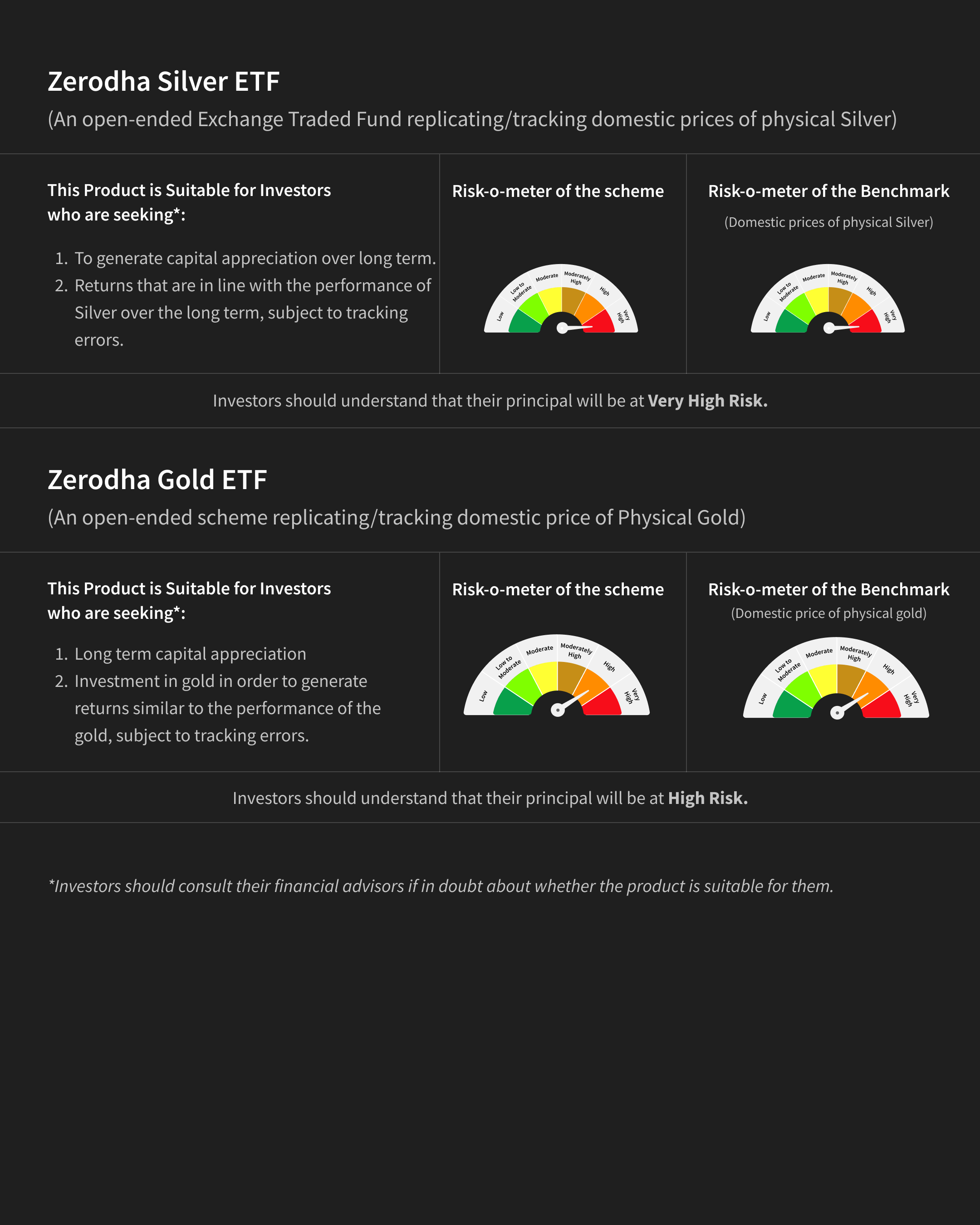
- Search for the ETF: There are different Gold and Silver ETFs listed on the exchanges. For instance, Zerodha Fund House offers the Zerodha Gold ETF and the Zerodha Silver ETF.
- Place Your Order: You can buy units of an ETF as easily and quickly as you would buy equity shares of listed companies. You can buy as little as one unit, making it accessible for investors with varying capital.
- Settlement: Once purchased, the units are credited to your Demat account on a T+2 basis, which means two business days after the trade date providing digital ownership of the asset.
Conclusion
Including both metals in your portfolio may enhance diversification. ETFs provide a transparent and cost-effective method to own these commodities without the worries of making charges, storage hassles or physical purity. As always, please ensure you evaluate your financial goals before making investment decisions.
Frequently Asked Questions (FAQs)
1. Do I need a Demat account to invest in Gold or Silver ETFs?
Yes, you need a Demat and trading account to invest in these ETFs. They are traded on recognized stock exchanges, allowing you to buy and sell units just like you would equity shares of a listed company.
2. Can I convert my ETF units into physical gold or silver?
Direct conversion of ETF units into physical gold or silver is restricted to bulk quantities known as "Creation Units." To exercise this option, you typically need to hold a minimum of 1 kg of Gold or 30 kg of Silver.
For investors holding quantities below these thresholds, the only option is to sell the units on the stock exchange for cash.
3. How are Gold and Silver ETFs taxed?
Taxation depends on your holding period. As per Budget 2024, if you hold the ETF units for more than 12 months, the gains are treated as Long Term Capital Gains (LTCG) and taxed at 12.5% without indexation. If held for 12 months or less, the gains are added to your income and taxed as per your applicable income tax slab.
4. What is the minimum amount required to invest in Gold/Silver ETFs?
You can start investing by purchasing as little as one unit of the ETF on the stock exchange. This makes it a more accessible option compared to buying physical bullion, which often requires a larger capital outlay.
5. Are Gold and Silver ETFs safe?
The units are backed by physical gold or silver of high purity. Investing in ETFs also eliminates the risks of theft and the costs of storage associated with holding physical metal.
Disclaimer - Please note that this article or document has been prepared on the basis of internal data/ publicly available information and other sources believed to be reliable. The information contained in this article or document is for general purposes only and not a complete disclosure of every material fact. It should not be construed as investment advice to any party in any manner. The article does not warrant the completeness or accuracy of the information and disclaims all liabilities, losses and damages arising out of the use of this information. Readers shall be fully liable/responsible for any decision taken on the basis of this article or document.
Investments in Gold and Silver ETFs are subject to market risks, including price volatility and tracking differences.
Mutual Fund investments are subject to market risks, read all scheme related documents carefully.